SELECTION GALLERY (PART 2)
Previous: Selection gallery - Part 1B (Ignition coil based electrical phenomena B)
[ Selection galleries : Part 1A | Part 1B | Part 2 | Part 3 | Part 4 | Part 5 ]
Flyback transformer based electrical phenomena
Flyback transformers use electromagnetic induction to generate high-voltages at (relatively) high frequencies. FBTs were commonly used to generate the HV power supply for cathode ray tubes in TVs and PC monitors. The higher frequency discharges give the appearance of silent electric arc flames rather than loud snapping transient sparks. Flyback transformer drivers can be constructed by hobbyists, or commercial equivalents can be purchased from websites such as rmcybernetics.com. A popular home-made circuit known for simplicity and effectiveness involves a type of resonant push-pull topology rather than the flyback operation of a standard flyback converter. This article features a selection of photos and videos without much explanation or technical information about the electrical phenomena displayed.
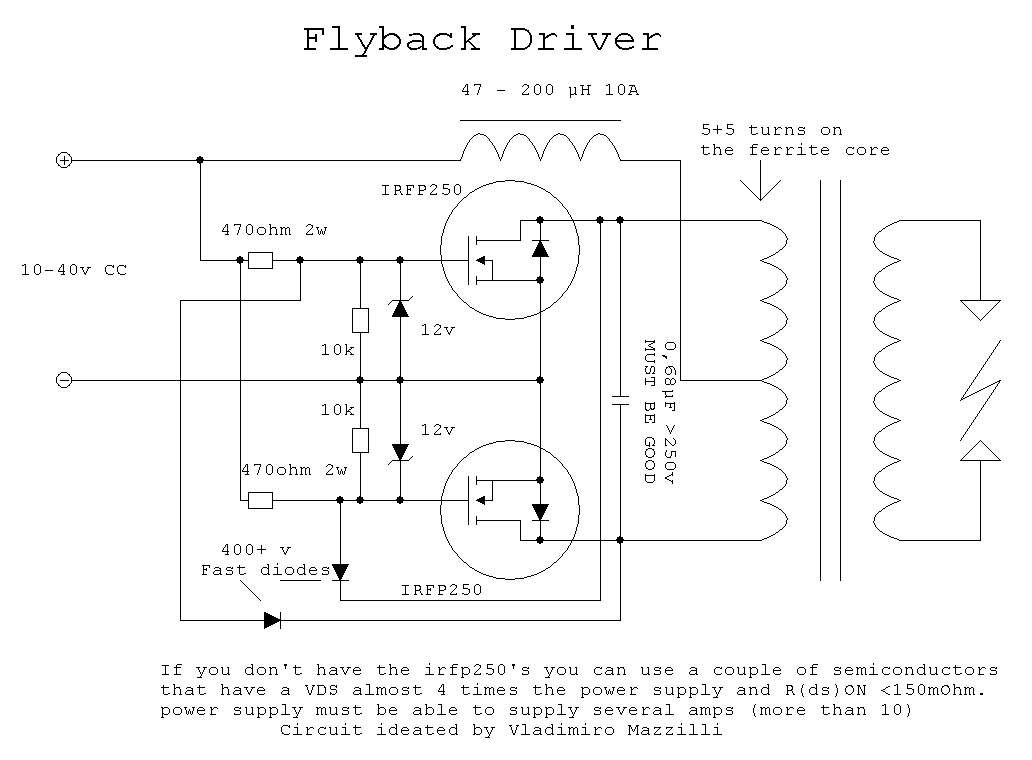
Preview images can (usually) be clicked on for larger versions of the image.
Captures of travelling arc i.e. "Jacob's ladder"
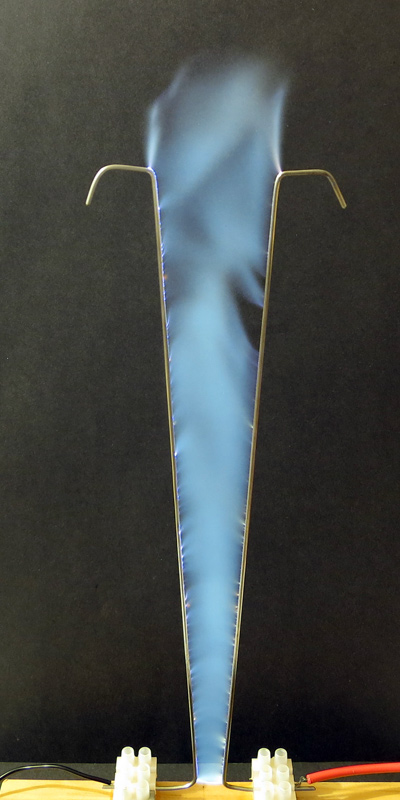
Once an arc is established, the voltage required to maintain it decreases and the arc itself is also conductive. Therefore, it is possible to lengthen the arc, and this can be exploited to make an automatic travelling arc which rises upwards due to heat:
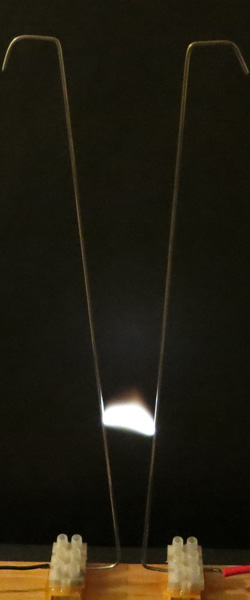
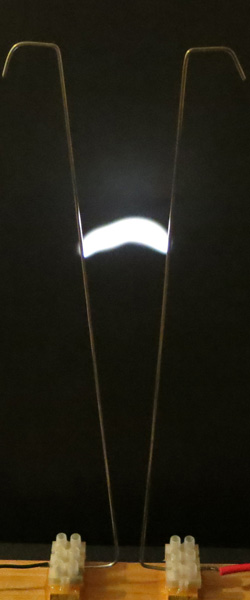
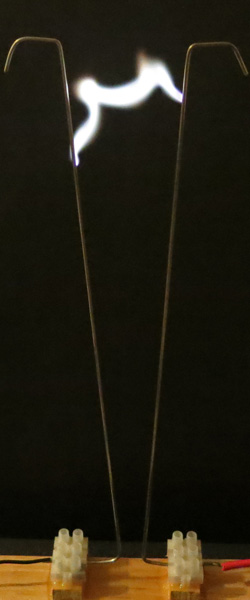
Here is a real-time video of the arc sweeping up the electrodes as in the above photos. The video file displayed below is 450x450 pixels in dimension, but is being displayed at 600x600 pixels, and other sizes are available below for download:

[lower resolution and/or lower quality] : S100-M3669-cropped-360x360lq.mp4 (469KB)
[medium resolution and/or medium quality] : S100-M3669-cropped-450x450mq.mp4 (1.18MB)
[higher resolution and/or higher quality] : S100-M3669-cropped-720x720hq.mp4 (8.10MB)
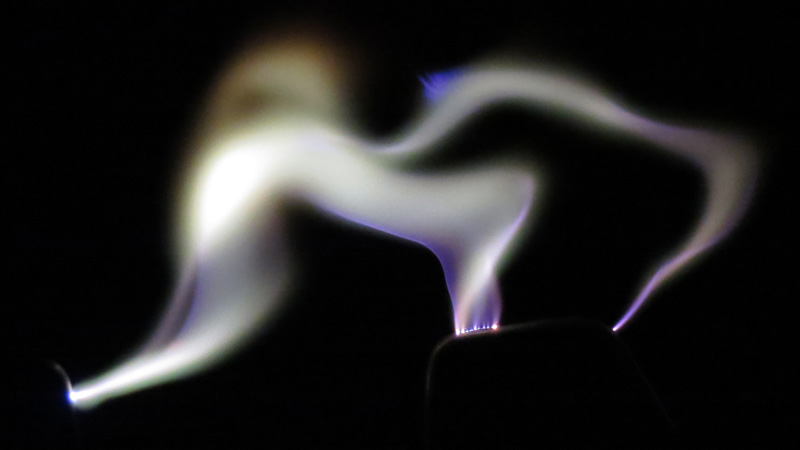
When the electrodes are close enough at the top, it is possible to get the electric flame to stay there indefinitely.
[lower resolution and/or lower quality] : S100-M3846-640x360lq.mp4 (432KB)
[medium resolution and/or medium quality] : S100-M3846-800x450mq.mp4 (964KB)
[higher resolution and/or higher quality] : S100-M3846-1280x720hq.mp4 (4.88MB)
I also captured a few slow motion videos capture at 120fps (1/4 speed) or 240fps (1/8th speed).
Click here for an example of such a video.
Prolonged exposures to travelling arc i.e. "Jacob's ladder"
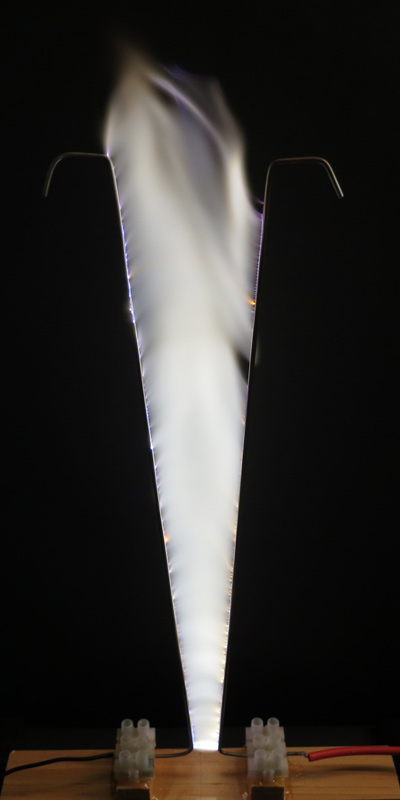
Leave the camera shutter open for long enough and you can capture the entire sweep in one shot:
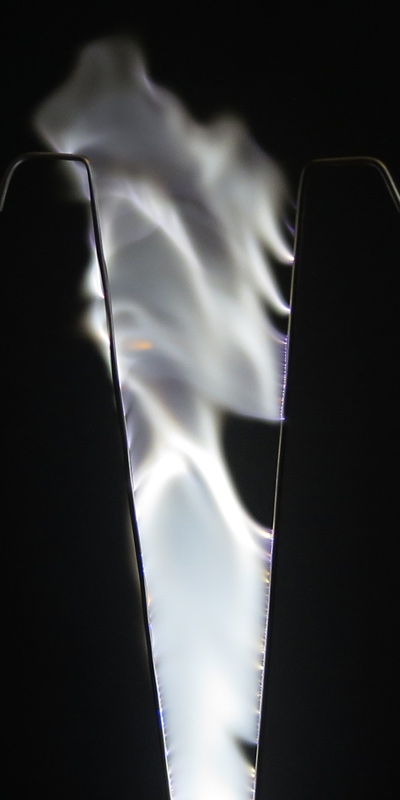
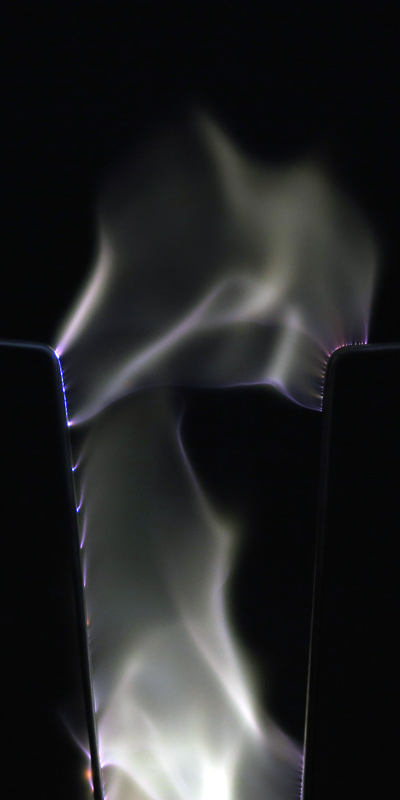
Performance greatly declined under lower voltage inputs, but the photography was still OK:





Manually hand drawn out arc flames
Again, once an arc is established, the voltage required to maintain it decreases and the arc itself is conductive. Eventually it becomes too long to be sustained and will break up, only to restart once the electrodes are brought much closer again:
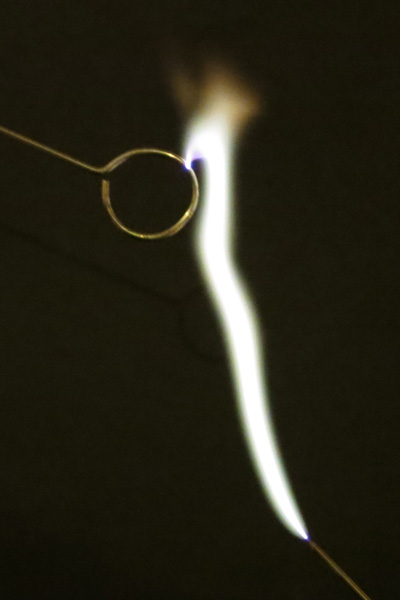
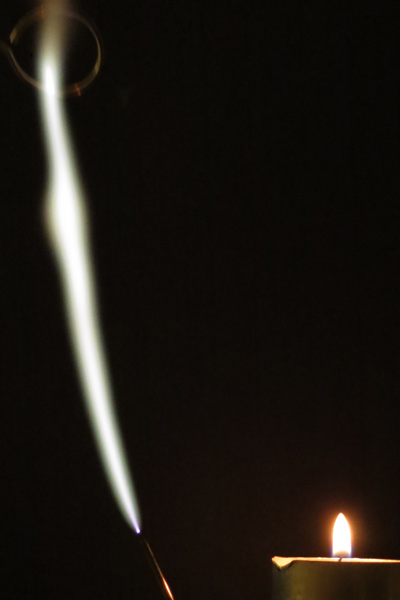
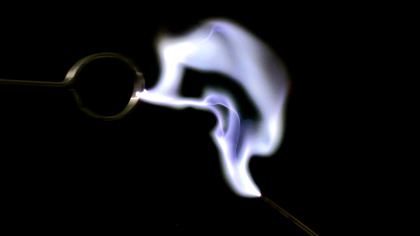
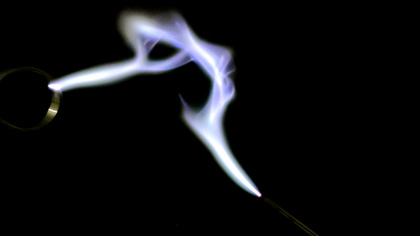
Here is a video of manually drawing out several arcs in a row:
[lower resolution and/or lower quality] : S100-M3757-640x360lq.mp4 (404KB)
[medium resolution and/or medium quality] : S100-M3757-800x450mq.mp4 (906KB)
[higher resolution and/or higher quality] : S100-M3757-1280x720hq.mp4 (5.44MB)
I captured some other similar videos which are not yet prepared, including slow motion ones.
Pyro-electrical party sparklers
A return of the party sparklers, this time using a more consistent arc instead of sparks:
[lower resolution and/or lower quality] : S100-M3715-640x360lq.mp4 (2.01MB)
[medium resolution and/or medium quality] : S100-M3715-800x450mq.mp4 (4.26MB)
[higher resolution and/or higher quality] : S100-M3715-1280x720hq.mp4 (11.2MB)


[very low resolution and/or very low quality] : S100-M3872-480x270vlq.mp4 (1.51MB)
[lower resolution and/or lower quality] : S100-M3872-640x360lq.mp4 (4.06MB)
[medium resolution and/or medium quality] : S100-M3872-800x450mq.mp4 (8.56MB)
[higher resolution and/or higher quality] : S100-M3872-1280x720hq.mp4 (25.2MB)
Other examples of electric arcs formed
Sometimes the negatively charged electrode would glow white hot:
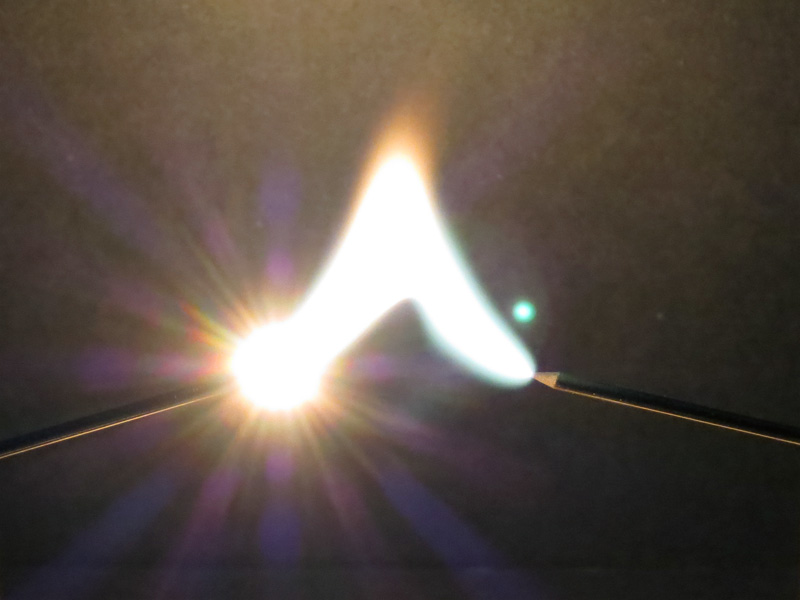
The following video shows that as the electrode approaches the water surface (before arc formation), corona discharge becomes more obvious, the sound of hissing becomes louder, and the water surface becomes more disturbed with motion:
[lower resolution and/or lower quality] : S100-M4357-640x360lq.mp4 (662KB)
[medium resolution and/or medium quality] : S100-M4357-800x450mq.mp4 (1.63MB)
[higher resolution and/or higher quality] : S100-M4357-1280x720hq.mp4 (9.97MB)
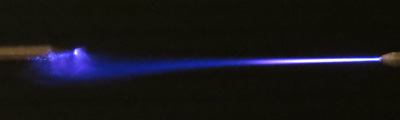
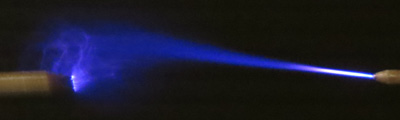
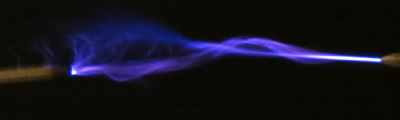
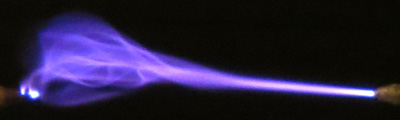
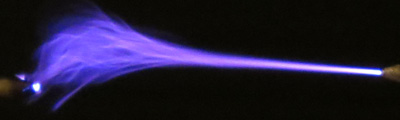
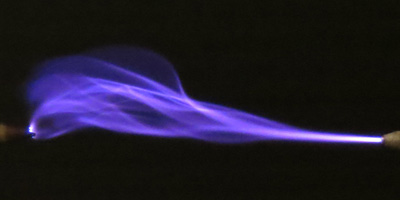
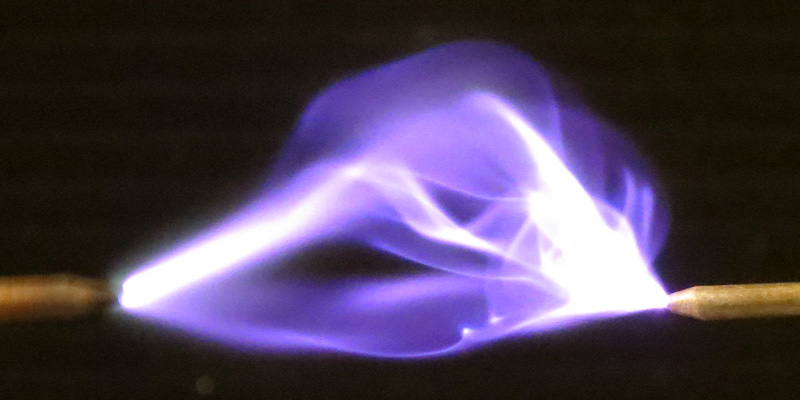
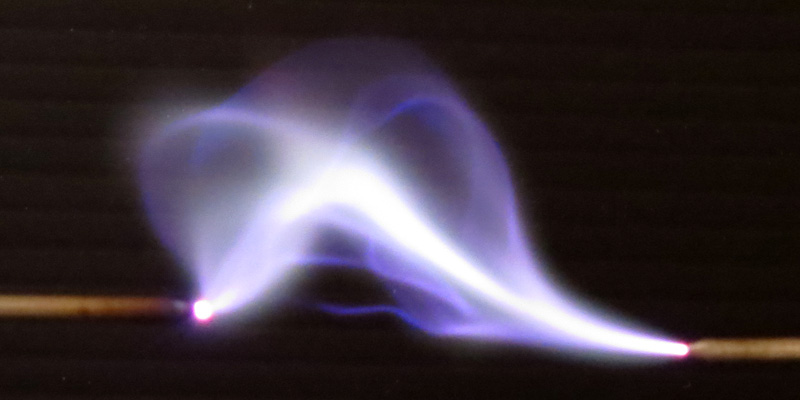
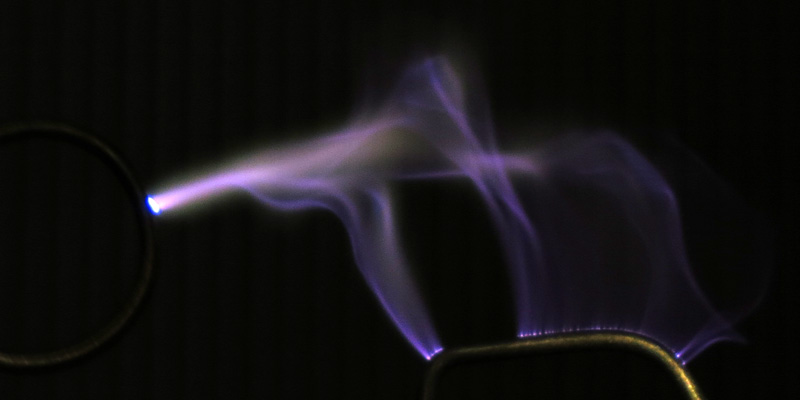
Photos of arcs formed when using various valued water resistors to attenuate the current:


Unconnected 'twisted pair' corona discharge
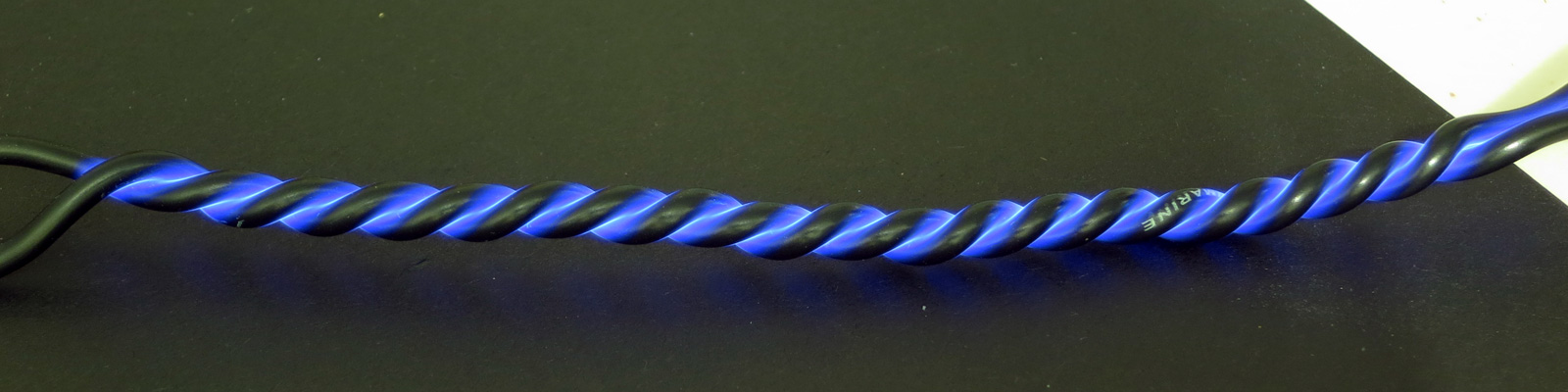
This was done around Christmas time and appears somewhat similar to candy cane:

Next: Selection gallery - Part 3 (Cockcroft-Walton multiplier based electrical phenomena)
[ Selection galleries : Part 1A | Part 1B | Part 2 | Part 3 | Part 4 | Part 5 ]

ELECTROPHILIATION : HIGH-VOLTAGE EXPERIMENTS !
[ image-aussie.com homepage | electrophiliation indexpage | high-voltage media galleries ]
© image-aussie.com (circa 2000-2015)