SELECTION GALLERY (PART 1B)
Previous: Selection gallery - Part 1A (Ignition coil based electrical phenomena A)
[ Selection galleries : Part 1A | Part 1B | Part 2 | Part 3 | Part 4 | Part 5 ]
Ignition coil based electrical phenomena B
Ignition coils are found in combustion engines to generate high-voltage pulses for the spark plugs. Two can be configured in anti-parallel to give twice the usual voltage output. Ignition coil drivers can be constructed by hobbyists, or commercial equivalents can be purchased from websites such as rmcybernetics.com. This article features a selection of photos and videos without much explanation or technical information about the electrical phenomena displayed.
Preview images can (usually) be clicked on for larger versions of the image.
Corona discharge and similar looking effects
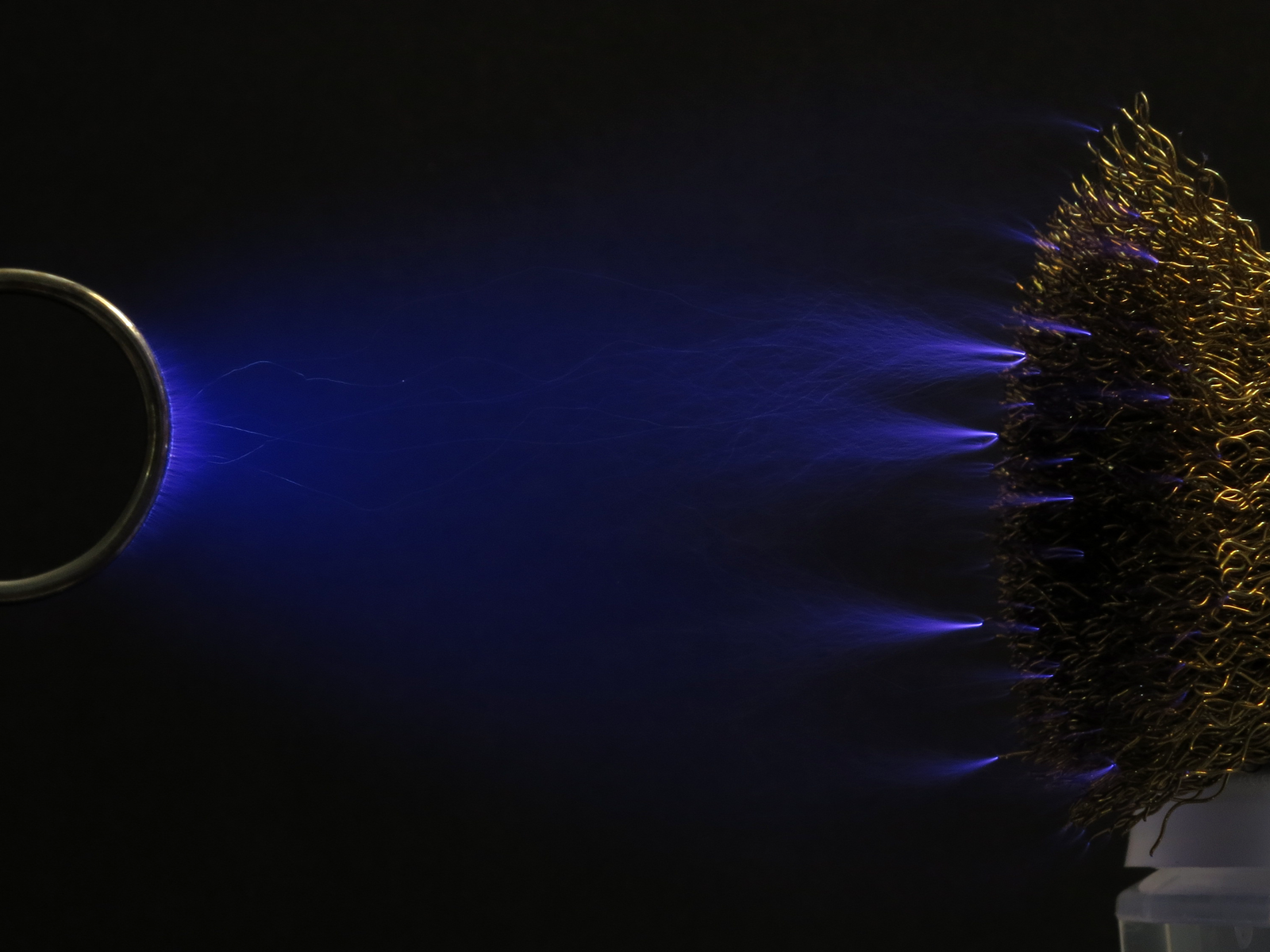
Corona discharge and similar phenomena occurs when the voltage is high enough to ionize the air surrounding the electrodes but not high enough to completely breakdown the air between them to produce a spark or arc. This seems to be more prominent around the positively charged electrode for HVDC (high-voltage direct current):
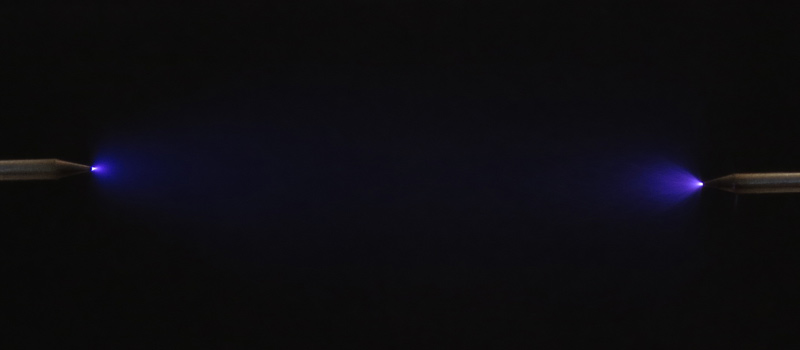
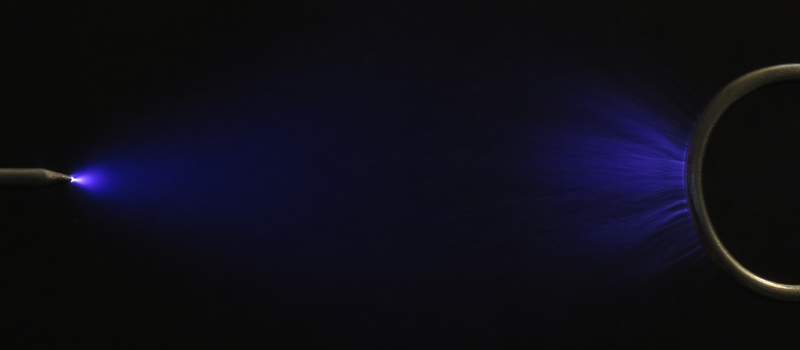
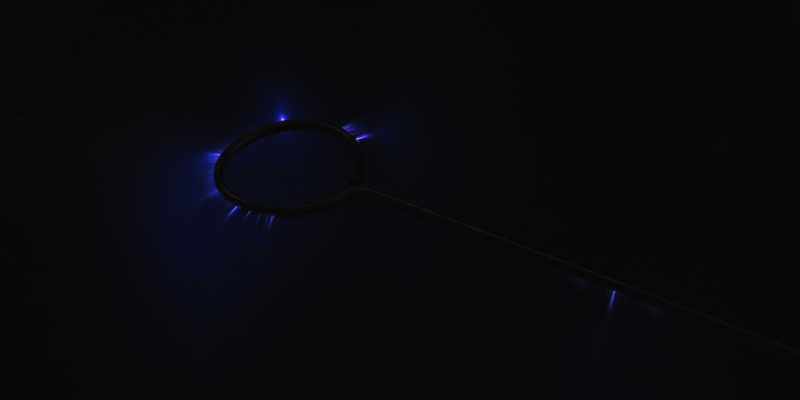
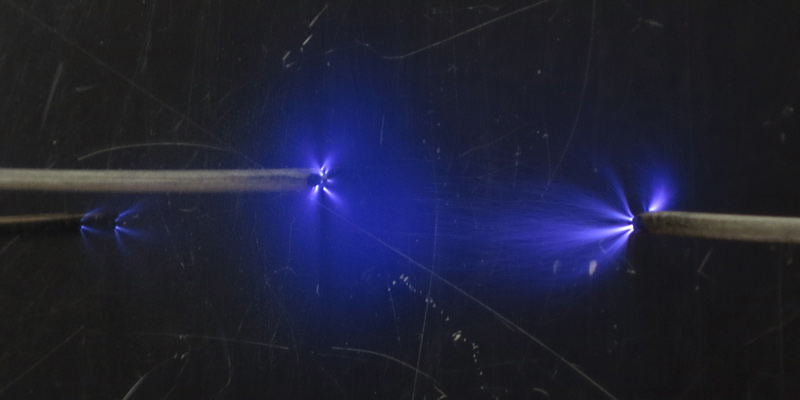
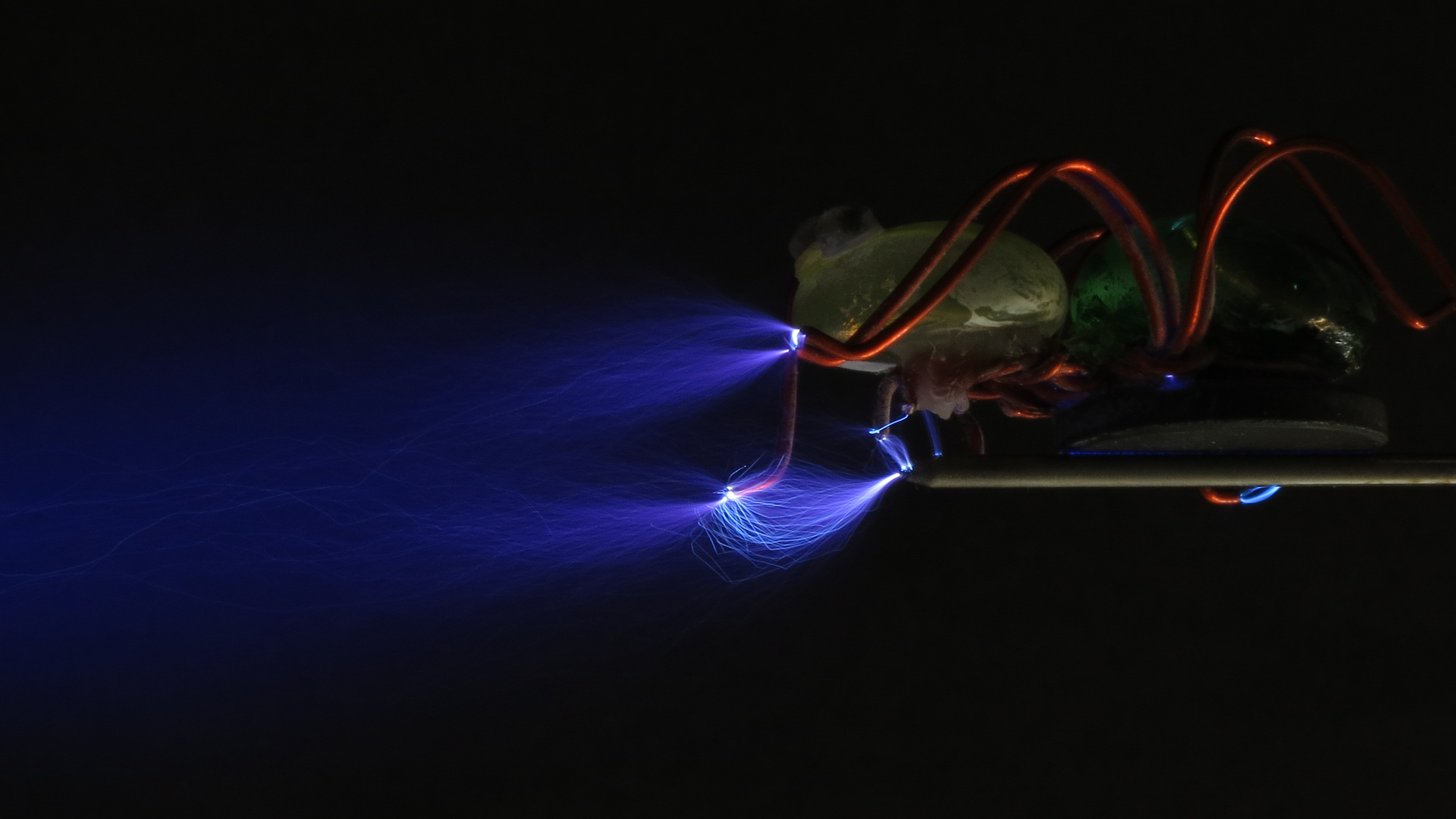
A googly-eyed fridge-magnet spider weaving an electric web of brush discharge:
Water based high-voltage experiments
Using salted water as a conductor to help spread the discharges through and around a plastic container:

[lower resolution and/or lower quality] : S100-M3333-640x360lq.mp4 (622KB)
[medium resolution and/or medium quality] : S100-M3333-800x450mq.mp4 (2.04MB)
[higher resolution and/or higher quality] : S100-M3333-1280x720hq.mp4 (9.62MB)
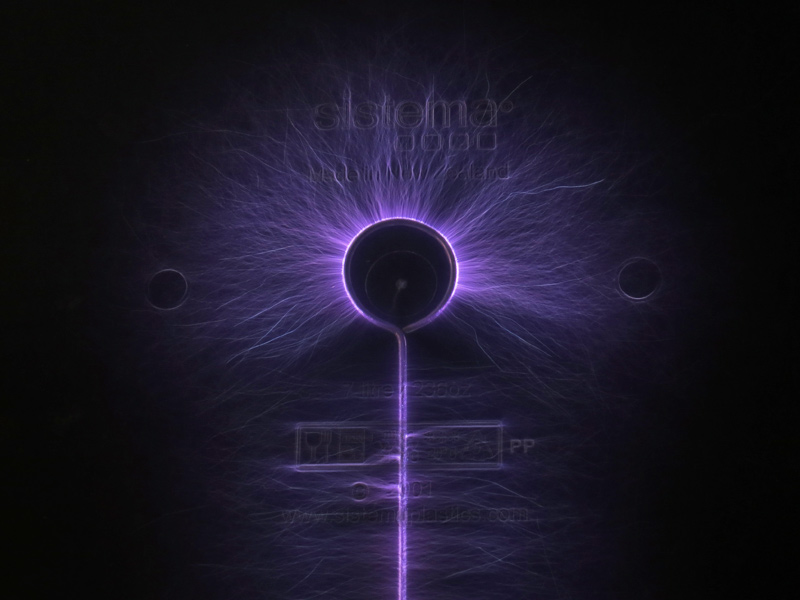
A prolonged exposure shot of attenuated discharges which appear like brush discharge (a type of corona discharge):
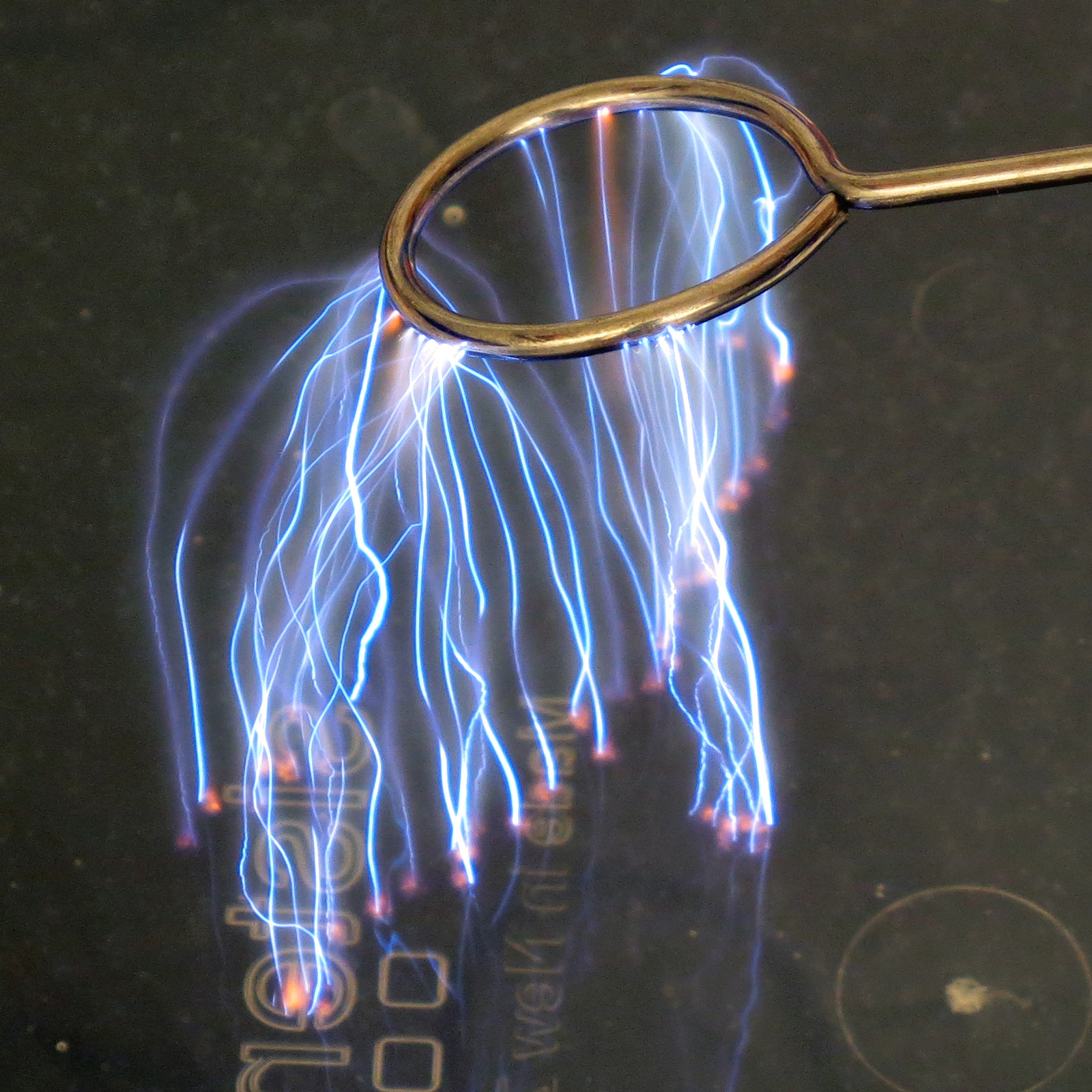
High-voltage sparks discharging directly from above into the salted water (added salt is not a requirement for tap water):
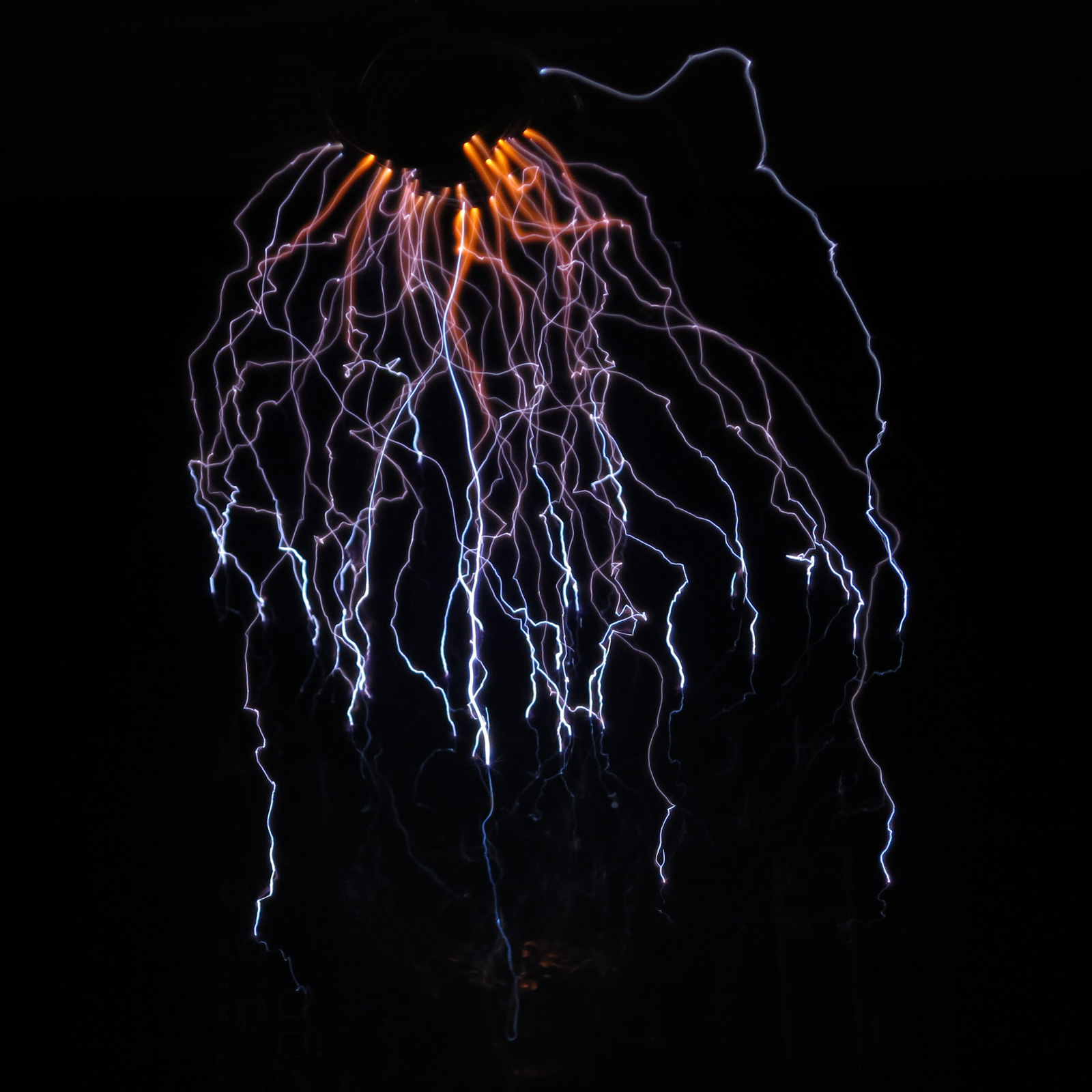
Video of similar as above, but this time using an insulated stick to manually move the electrode around above the water:

[lower resolution and/or lower quality] : S100-M3530-640x360lq.mp4 (664KB)
[medium resolution and/or medium quality] : S100-M3530-800x450mq.mp4 (1.66MB)
[higher resolution and/or higher quality] : S100-M3530-1280x720hq.mp4 (10.00MB)
Electricity travelling from one glass of water to another:
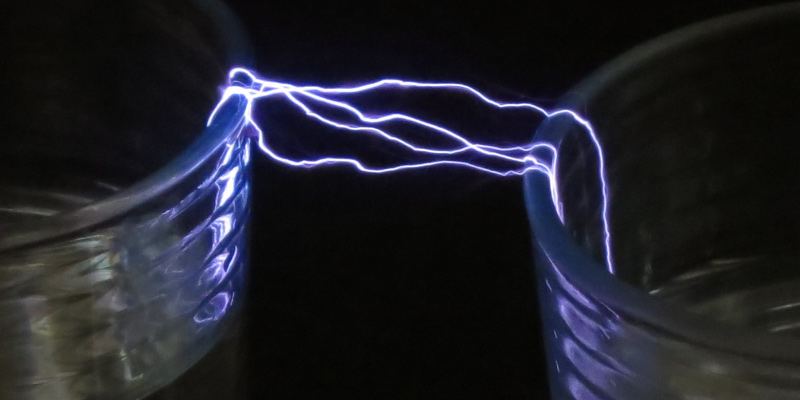
Click here to see a video of the above experiment.
Prolonged exposure shot of electricity travelling between two plastic containers full of water:
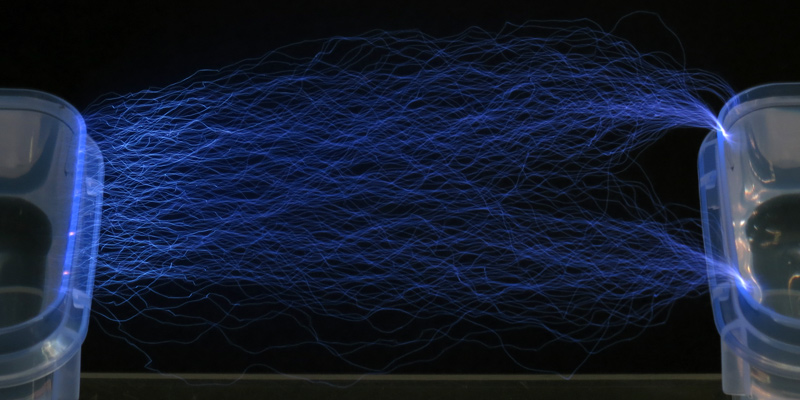
Click here to see a real-time video of the above experiment.
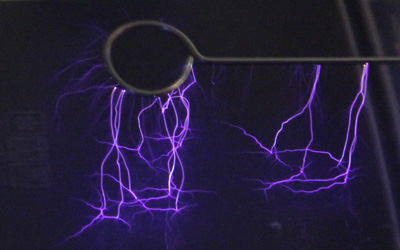
A few more photos of discharges into water:
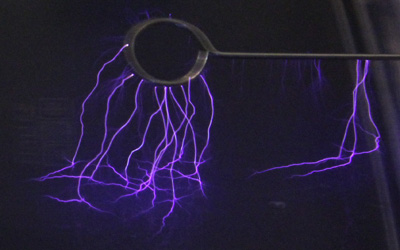
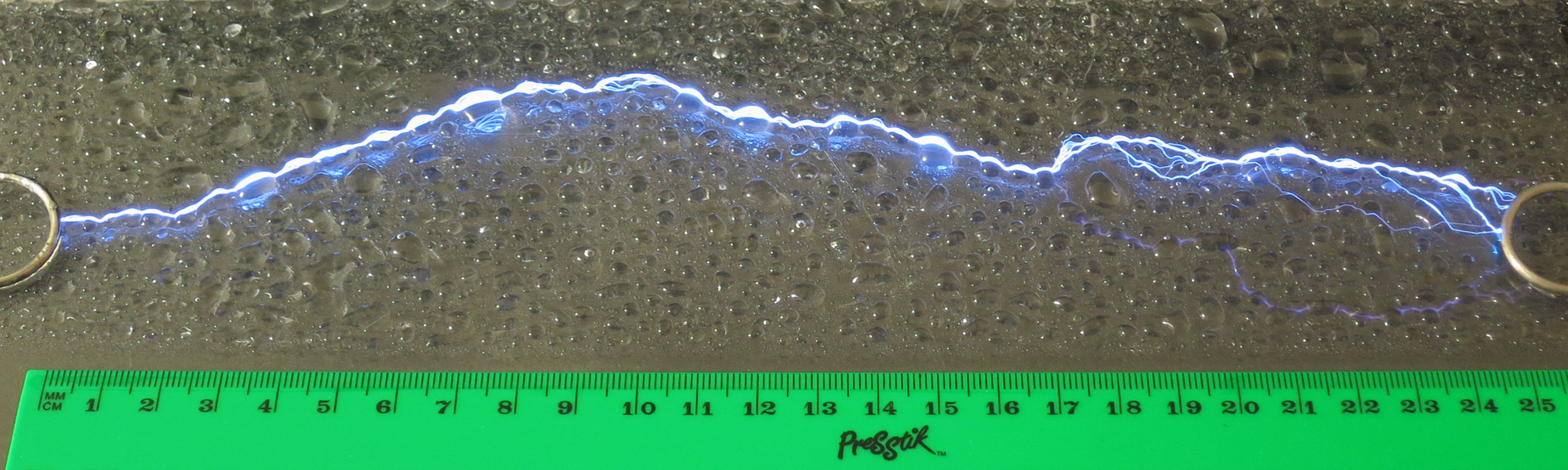
Using water droplets to extend the length of the sparks on the surface of a plastic sheet:
Arcs and spark-arc hybrid appearances
A more flame-like continuous arc forms when the plasma from each discharge lasts long enough before the next discharge, which is usually achieved with higher frequencies and/or shorter spark gaps:
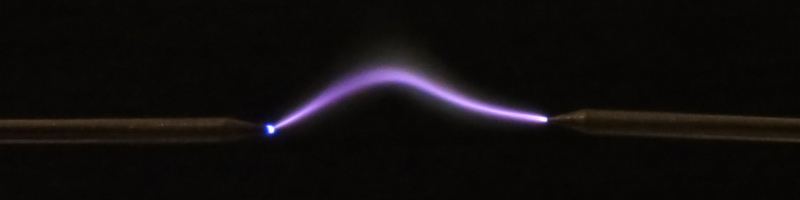
Below is a video of an arc, at roughly 15mm and 300Hz, which clearly has a purple hue:
[lower resolution and/or lower quality] : S100-M3264-cropped-640x360lq.mp4 (595KB)
[medium resolution and/or medium quality] : S100-M3264-cropped-800x450mq.mp4 (3.12MB)
[higher resolution and/or higher quality] : N/A
Hot air rises, and the tendency to bend or rise upwards is a typical characteristic of an electrical arc:
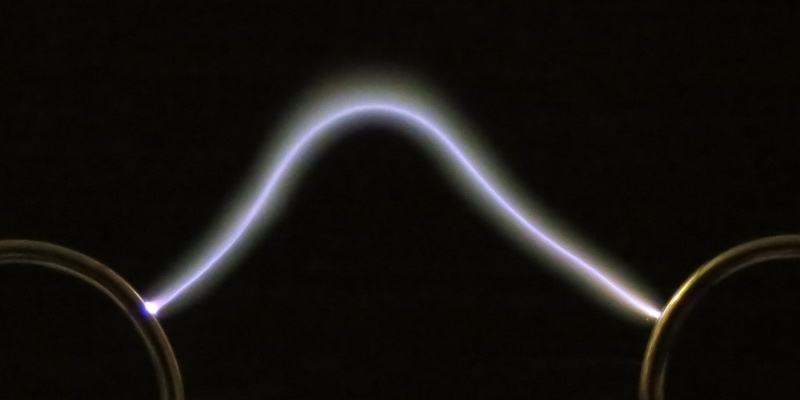
There appears to be a grey area inbetween sparks and arcs:
[lower resolution and/or lower quality] : S100-M3567-640x360lq.mp4 (310KB)
[medium resolution and/or medium quality] : S100-M3567-800x450mq.mp4 (709KB)
[higher resolution and/or higher quality] : S100-M3567-1280x720hq.mp4 (3.80MB)
A prolonged exposure photo of the apparent spark-arc hybrid:
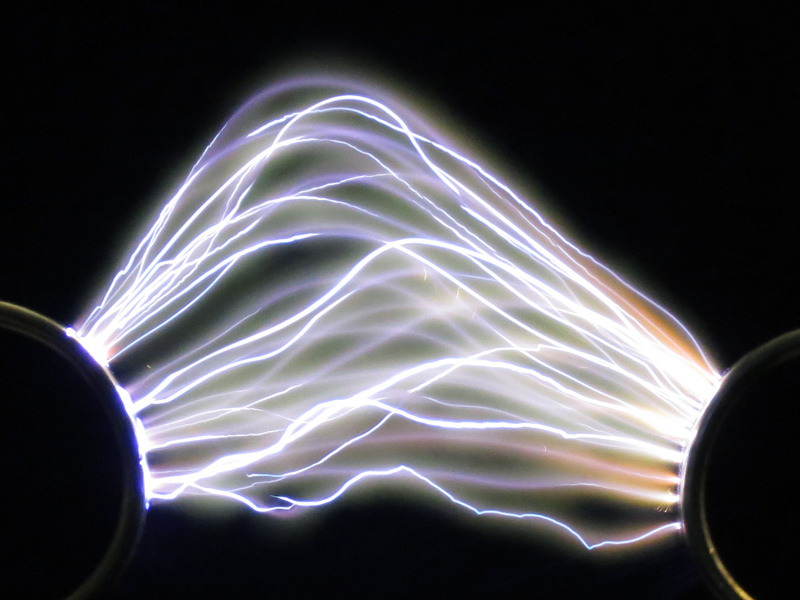
Slow motion footage taken at 240fps (not shown yet) revealed that some of the so-called "spark-arc hybrids" had majority periods of no light being emitted, but obviously the air remained heated or ionized enough to influence the next discharge.
Miscellaneous high-voltage experiments
Here are two videos of manually starting with a small spark gap and (safely) lengthening it and shortening it:
[lower resolution and/or lower quality] : S100-M3486-640x360lq.mp4 (1.01MB)
[medium resolution and/or medium quality] : S100-M3486-800x450mq.mp4 (2.40MB)
[higher resolution and/or higher quality] : S100-M3486-1280x720hq.mp4 (13.5MB)
The above video involved using a nylon slider for a smooth transition, but the next one involved holding an insulated stick:
[lower resolution and/or lower quality] : S100-M3445-640x360lq.mp4 (628KB)
[medium resolution and/or medium quality] : S100-M3445-800x450mq.mp4 (1.86MB)
[higher resolution and/or higher quality] : S100-M3445-1280x720hq.mp4 (11.6MB)
The following image and videos were vaguely inspired by, and are a pathetic tribute to, [Photonicinduction]'s awesome 400kV "Thunderstorm Capacitor" video on YouTube (I also recommend viewing his other videos too):
http://www.youtube.com/watch?v=GBaUoVe34xs
Two aluminium foil strips, about 10cm apart, were taped on a white nylon board:
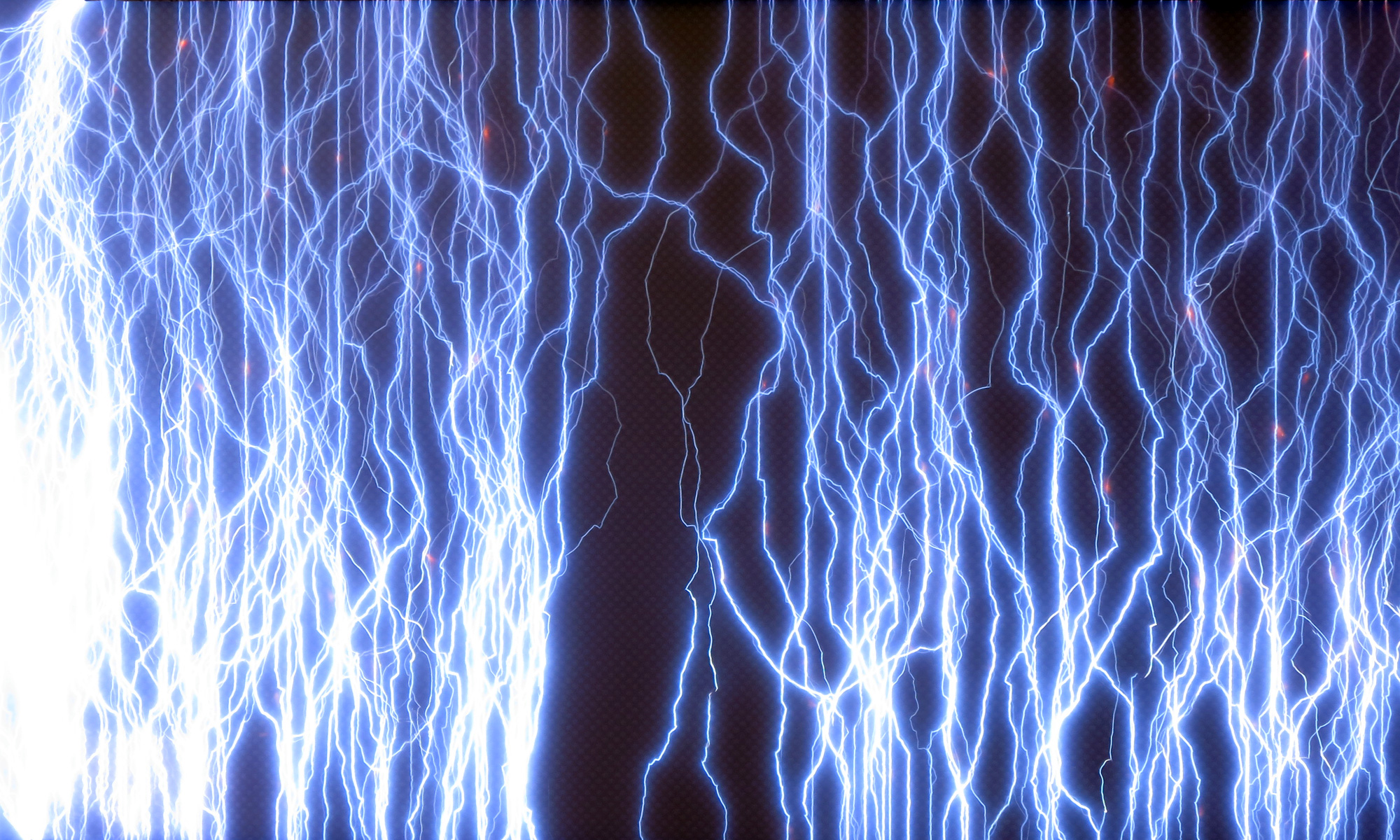
Here is a video of the above setup. It is somewhat blurry, which somehow does not matter much. Unfortunately, the levels of electromagnetic interference involved, with the camera only about 40cm away, caused black bars to appear in the video. Nevertheless, the electrical discharges in the video appear to be like multiple lightning strikes:
[lower resolution and/or lower quality] : S100-M3422-640x360lq.mp4 (621KB)
[medium resolution and/or medium quality] : S100-M3422-800x450mq.mp4 (1.47MB)
[higher resolution and/or higher quality] : S100-M3422-1280x720hq.mp4 (7.26MB)
The next video is of a hook shaped electrode being (safely) manually moved over a sheet of aluminium foil:
[lower resolution and/or lower quality] : S100-M3414-640x360lq.mp4 (886KB)
[medium resolution and/or medium quality] : S100-M3414-800x450mq.mp4 (2.22MB)
[higher resolution and/or higher quality] : S100-M3414-1280x720hq.mp4 (16.2MB)
Ever wanted to start a party sparkler with electricity? Here are some (safely done) video snapshots of just that. The presence of the burning sparkler appears to turn the electrical discharges a fat orange:
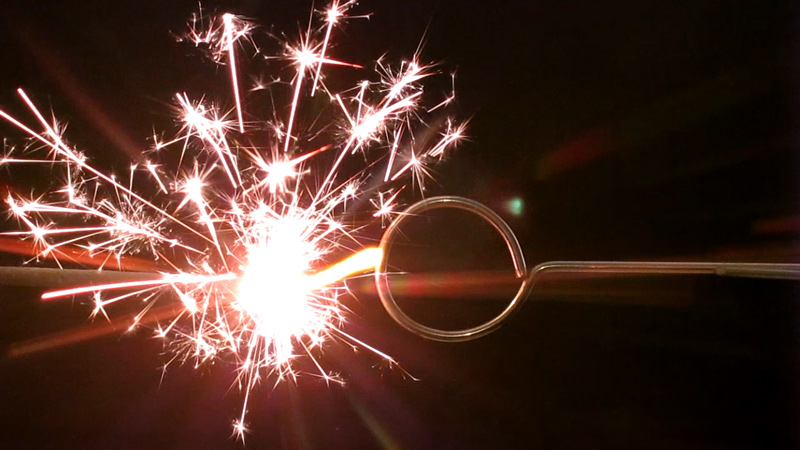
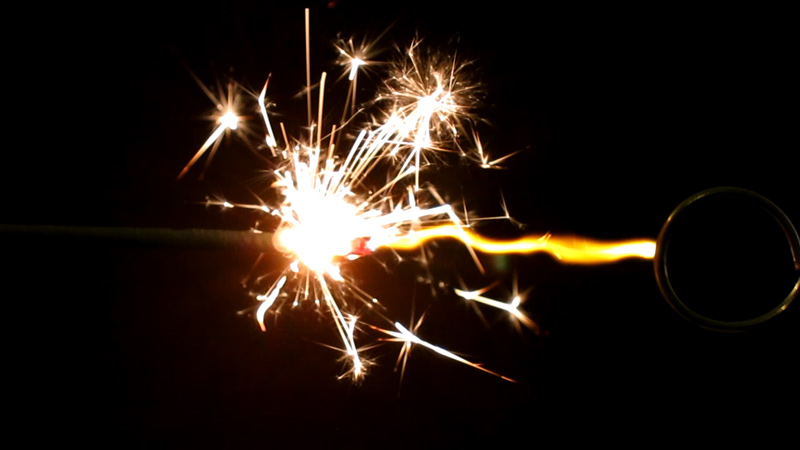
In the following video of party sparklers being ignited with electric sparks, ignition takes about 3 seconds (these sparklers ignite much quicker if the electrodes are closer, but it happens too quickly to be worth taking a video. The file will take longer than usual to load because of the extra details involved with sparklers:
[lower resolution and/or lower quality] : S100-M3582-640x360lq.mp4 (4.12MB)
[medium resolution and/or medium quality] : S100-M3582-800x450mq.mp4 (8.42MB)
[higher resolution and/or higher quality] : S100-M3582-1280x720hq.mp4 (21.5MB)
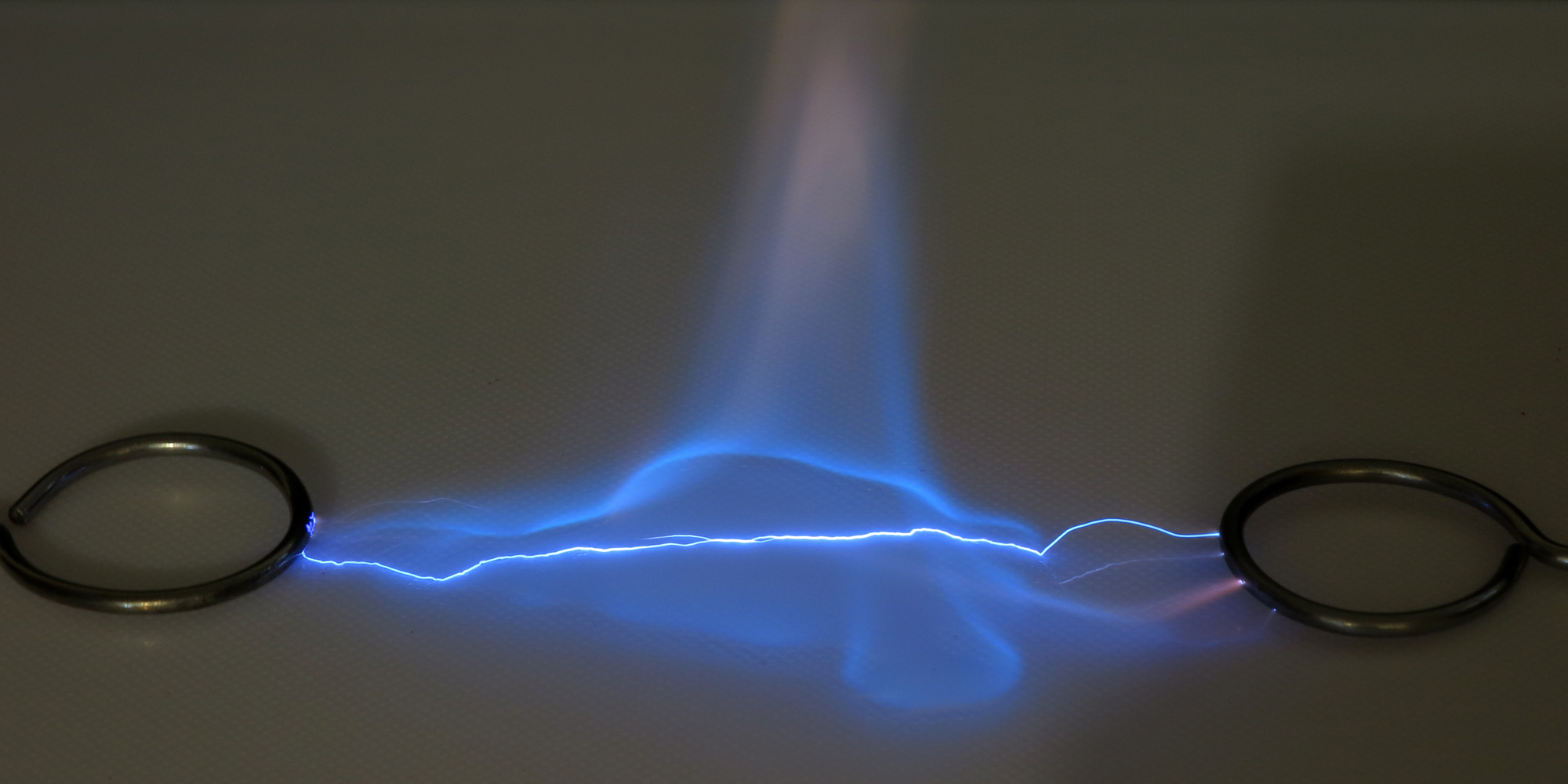
The sparks were used to ignite a few smeared drops of "methylated spirits" (tainted/denatured alcohol):
I observed other experiments, such as lighting up a fluorescent globe and blowing around a candle flame with electric wind, but these deviate too much from electrical discharges and were not interesting enough to feature in this selection gallery.
Next: Selection gallery - Part 2 (Flyback transformer based electrical phenomena)
[ Selection galleries : Part 1A | Part 1B | Part 2 | Part 3 | Part 4 | Part 5 ]

ELECTROPHILIATION : HIGH-VOLTAGE EXPERIMENTS !
[ image-aussie.com homepage | electrophiliation indexpage | high-voltage media galleries ]
© image-aussie.com (circa 2000-2015)